
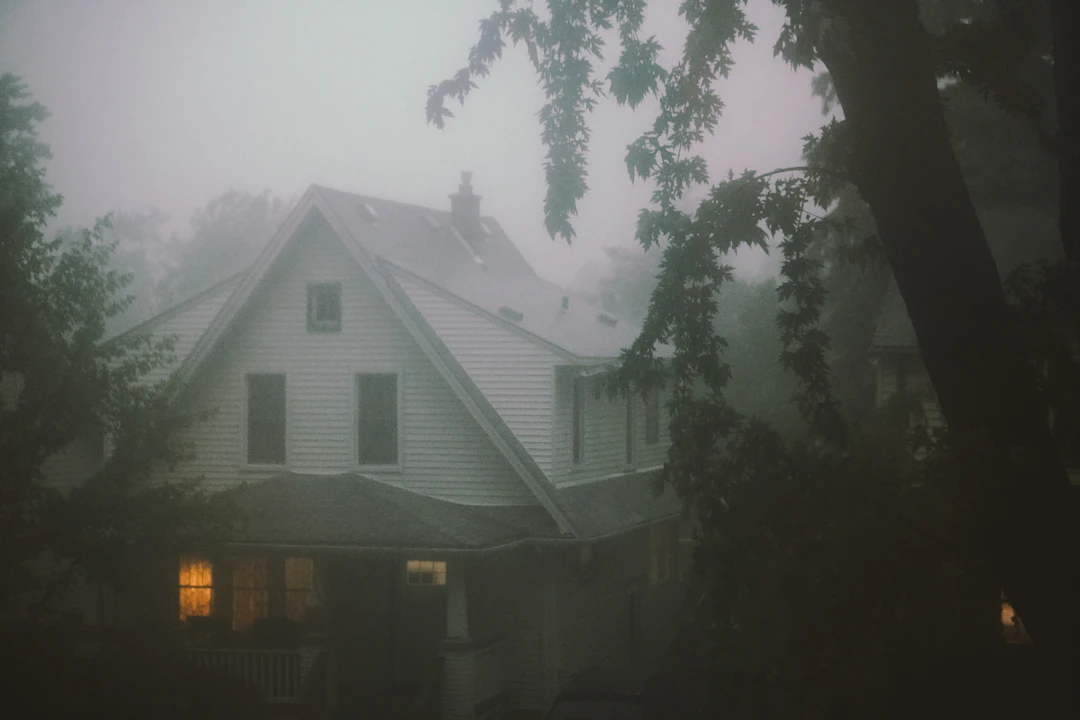
Cosmic Gothic is the meeting point between two powerful traditions: Gothic fiction’s haunted spaces, inherited secrets and returning past, and cosmic horror’s vast scales, alien realities and challenge to human importance. The combination works because both traditions destabilize the present. The Gothic says the past is not finished; the cosmic says human history may be only a fragment of a much larger story.
The phrase is useful as a critical description rather than a rigid genre label. A story becomes cosmic Gothic when its castle, house, family secret or buried history opens not merely onto a ghostly past but onto a reality that exceeds human history itself.
What is Cosmic Gothic?
Cosmic Gothic is fiction that combines Gothic structures and atmosphere with cosmic-horror ideas such as deep time, human insignificance, alien intelligence or realities beyond ordinary comprehension. It turns the haunted house into a doorway onto a larger universe.
A conventional Gothic mystery might reveal that a mansion was built over a crime. A cosmic-Gothic story might reveal that the crime repeated a pattern older than the human settlement, that the architecture follows nonhuman principles, or that the family history is connected to something outside accepted biology.
The result keeps the intimacy of Gothic fiction while gaining the scale of cosmic horror.
How is Cosmic Gothic different from traditional Gothic fiction?
Traditional Gothic fiction often locates horror in human history, inheritance, repression and the supernatural return of the past; Cosmic Gothic pushes that past beyond the human scale. The house may still be haunted, but what haunts it may not be a human ghost.
LORE’s Gothic fiction guide explores the tradition’s central features. Architecture, secrecy, isolation and emotional extremity remain important in the cosmic hybrid. What changes is the horizon of explanation.
From family history to deep time
Gothic stories often uncover a concealed genealogy. Cosmic Gothic can extend genealogy until it becomes biology, evolution or something stranger. The family secret is no longer simply that an ancestor committed a crime; it may be that the family is connected to a lineage that predates humanity.
From haunted room to impossible space
A locked room is a classic Gothic device. Cosmic horror asks whether the room obeys the same geometry as the rest of the building. The physical secret becomes ontological.
How is Cosmic Gothic different from ordinary cosmic horror?
Cosmic Gothic retains the Gothic emphasis on place, inheritance, memory and emotional intimacy, while cosmic horror can operate without any of those elements. A story set on a distant planet can be cosmic without being Gothic.
Cosmic horror often begins with investigation into science, archaeology or forbidden knowledge. Cosmic Gothic can use the same devices, but the discovery is anchored in a house, landscape, family, ruin or historical wound. The vast unknown is encountered through something painfully local.
| Element | Gothic | Cosmic horror | Cosmic Gothic |
|---|---|---|---|
| Typical scale | Family, house, region, past | Planetary, historical, cosmic | Local doorway to cosmic scale |
| Core pressure | The past returns | Humanity is decentered | The returning past is larger than humanity |
| Space | Castle, mansion, ruin, landscape | Any setting, often remote | Haunted place with ontological depth |
| Knowledge | Secret lineage or crime | Forbidden cosmic truth | Personal secret becomes cosmic truth |
Why do Gothic houses work so well with cosmic horror?
A Gothic house already behaves like a model of memory: rooms conceal history, boundaries separate knowledge, and architecture turns secrets into physical space. Cosmic horror only needs to make that architecture point beyond the human.
A cellar can descend too far. A window can show stars that should not be visible. Renovation can expose materials older than the geology beneath the house. The building becomes evidence rather than backdrop.
This works psychologically because homes are supposed to protect and orient us. We know where the bedroom is, which wall borders the street and how many floors exist. When a house violates those assumptions, cosmic incomprehensibility enters an intimate scale.
What role does deep time play in Cosmic Gothic?
Deep time transforms the Gothic obsession with the past into a confrontation with periods so vast that human history becomes almost negligible. The buried secret is no longer centuries old but millions of years old.
Gothic fiction thrives on documents: diaries, letters, portraits, inscriptions and family records. Cosmic Gothic can place those records beside fossils, geological strata or astronomical evidence. Two kinds of history collide. The written archive says one thing; the material universe says another.
The emotional effect is powerful because the character begins with a personal question—who lived here, what happened to my ancestor, why is this room sealed—and ends with a question about the nature of humanity.
Does Cosmic Gothic need monsters?
No. Cosmic Gothic can work entirely through place, knowledge and implication. A visible creature may even reduce the effect if it turns an impossible situation into a conventional chase.
An old house that slowly reveals impossible measurements can be enough. So can a family archive containing photographs from before photography, or a coastal ruin aligned with a star that no longer exists. The reader needs evidence that ordinary explanation is failing, not necessarily a body to look at.
When creatures do appear, they are most effective when they deepen the mystery. An organism should raise questions about origin, scale or classification rather than answer them.
Is Lovecraft Cosmic Gothic?
Parts of Lovecraft’s work can be read through a Cosmic-Gothic lens because he repeatedly combines inherited history, decaying places and forbidden ancestry with cosmic revelation. Not every Lovecraft story is Gothic in the same degree.
The old house, isolated community, ancestral secret and discovered manuscript are all devices with deep Gothic roots. Lovecraft frequently redirects them toward cosmic materialism, alien life and deep time. LORE’s Lovecraft guide provides a wider route through his life, stories and legacy.
The hybrid also extends far beyond Lovecraft. Later writers can use Gothic structures to explore ecological, social, bodily or philosophical forms of cosmic unease without reproducing his particular mythology.
How does Cosmic Gothic use landscape?
Landscape becomes a form of archive. Cliffs, caves, forests, marshes and coastlines preserve traces that can contradict human stories about a place.
The coast
Coasts are natural thresholds. Land meets an environment humans cannot inhabit unaided, tides erase evidence, and horizons make distance visible. A Gothic coastal house already feels exposed; cosmic horror adds the possibility that the sea contains a history older than the land’s inhabitants.
The forest
Forests limit sight and disrupt orientation. Trees can outlive individuals and make human paths temporary. Cosmic Gothic can extend that age until the forest appears connected to a nonhuman continuity.
Ruins
Ruins make time visible. A human ruin is Gothic because it records loss. A ruin that cannot be human is cosmic because it expands the possible history of the world.
Why are manuscripts and archives so important?
Documents allow the story to reveal truth in fragments, preserving uncertainty while making the discovery feel materially grounded. A character can compare handwriting, dates and testimonies without ever obtaining a complete explanation.
The archive also creates competing voices. One witness describes a haunting, another records astronomical data, a third insists nothing happened. The reader builds a pattern from disagreement.
This technique has special resonance for LORE because the site itself preserves a real magazine archive. Historical documents are not inherently sinister, of course, but they demonstrate why archives are narratively powerful: they let the past speak without making it fully present.
How can writers create Cosmic Gothic without clichés?
Begin with a specific Gothic inheritance and decide what larger reality it will expose. The story should not merely place a tentacled creature in a castle.
Choose the human-scale secret first
Start with a missing relative, disputed property, sealed room, local legend or inherited object. Give the protagonist a reason to care before expanding the scale.
Let evidence widen gradually
The first clue should support an ordinary explanation. Later clues should strain it. The strongest escalation moves from unusual to impossible without announcing the final category too early.
Preserve emotional stakes
Cosmic scale can make characters feel abstract. Gothic intimacy prevents that. A revelation about deep time matters more when it also changes how a protagonist understands a parent, home or identity.
Do not explain the entire cosmos
A family tree can be complete; the universe should not need to be. Cosmic dread depends on the sense that the discovered pattern continues beyond the page.
Where does Cosmic Gothic overlap with weird fiction?
It overlaps wherever Gothic forms open onto phenomena that resist stable classification. That resistance is central to weird fiction.
A ghost with a clear identity and motive can remain within traditional supernatural Gothic. A presence that might be organism, place, memory and physical law at once moves toward the weird. Add deep time or radical human insignificance and the cosmic dimension becomes stronger.
These categories are therefore best understood as intersecting maps. Gothic describes a historical tradition and set of structures. Weird describes boundary-breaking strangeness. Cosmic horror describes a scale and philosophical pressure. One story can occupy all three.
Why is Cosmic Gothic so effective?
It combines two opposite scales of fear: the intimate and the immeasurable. A bedroom, family name or childhood landscape becomes connected to something that cannot care about human intimacy at all.
That contrast gives the hybrid unusual force. Pure cosmic scale can become abstract; pure Gothic secrecy can become familiar. Together, they renew each other. The old house is not merely haunted. It is a coordinate. The family curse is not merely inherited. It is evidence. The ruin does not only remember the dead. It remembers a world in which humanity had not yet appeared.
Cosmic Gothic ultimately asks a disturbing question: what if the place that made you feel rooted is the very place that proves how little the human world understands its own foundations?